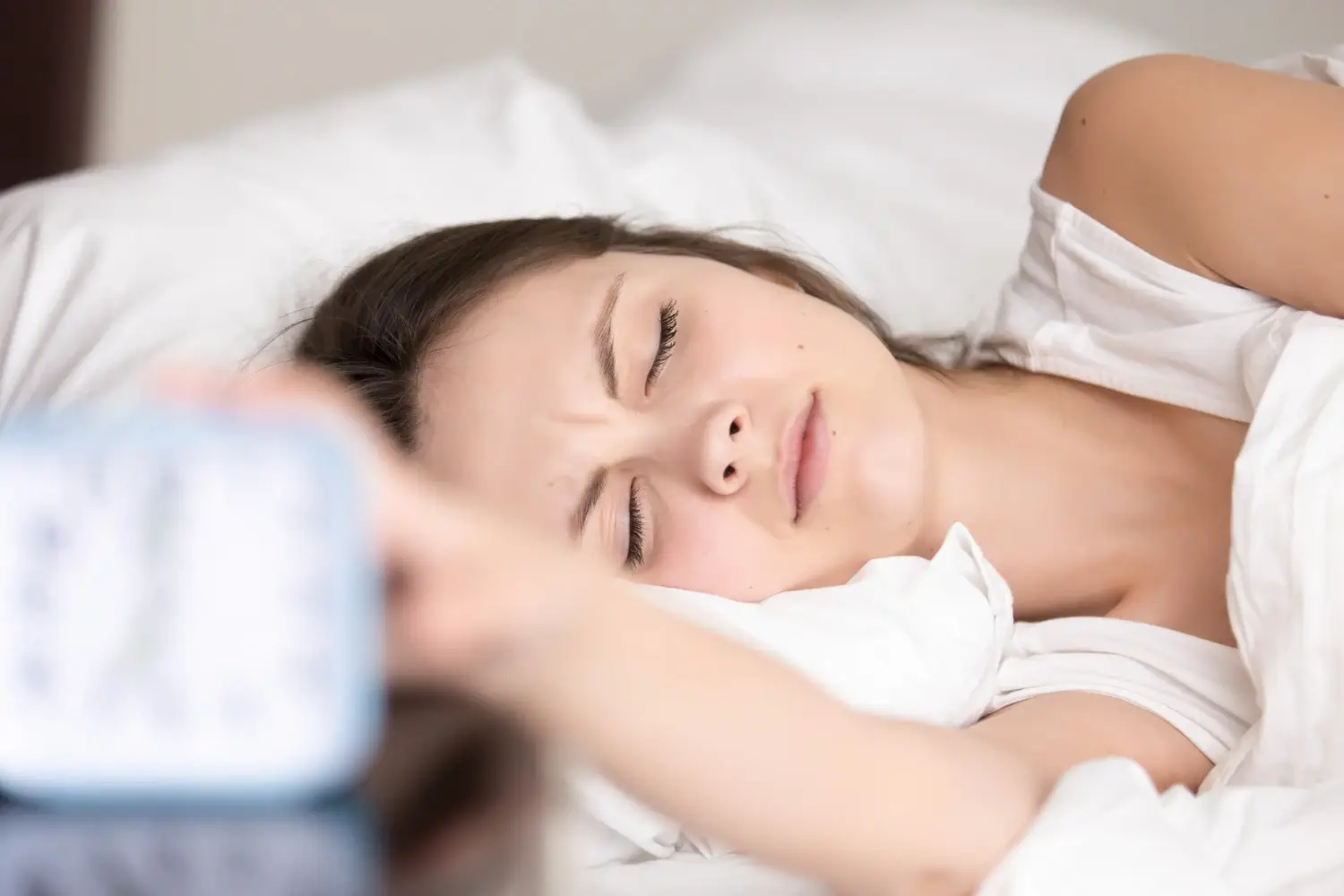
Have you been kicked to the couch? Are you keeping your loved ones up all night? Do you snore or gasp for air while you sleep? Do you wake up feeling exhausted? You may have sleep disordered breathing or sleep apnea.
Sleep disordered breathing is a general term for breathing difficulties occurring during sleep, and includes snoring and obstructive sleep apnea. Obstructive Sleep Apnea (OSA) is a condition involving repeated episodes of partial or complete blockage of the airway during sleep. When this occurs, your body perceives this as choking, causing your heart rate to slow and your blood pressure to go up, your brain is aroused, and your sleep is disrupted. Oxygen levels in the blood also drop. You may not sleep well, but you are probably unaware that this is happening.
Sleep apnea is a progressive disease and increases in incidence and severity with age. Conditions that have been linked to sleep apnea include high blood pressure, cardiovascular disease, increased risk for Diabetes and impaired concentration. Though it has the potential to be debilitating, at Bright Ridge Dental, Bentonville dentists Drs. K.C. and Kait Dietz have effective treatments that will put an end to your lonely nights and weary days.
Along with complaints from those closest to you, the following are sleep apnea symptoms to be aware of:
We use the following sleep apnea appliances (presented in alphabetical order).
The Narval CC™ uses technology that has been developed and refined for a decade, with the help of multi-disciplinary medical teams. The unique innovation is the jaw relationship, which minimizes the physiological joint-stress and limits the risk of dental side-effects. Instead of pushing the mandible forward, it is retained in a forward position. This mechanism design allows the use of semi-rigid plastic materials, which enable greater flexibility and comfort for the patient. In March 2009 Laboratoires Narval introduced the first custom device, made by Computer Aided Design (CAD) and Computer Aided Manufacture (CAM). Using selective laser sintering of a biocompatible polymer, CAM guarantees consistent, industrial-strength manufacturing. The unique CAD/CAM technology delivers a highly adjustable (15 mm) bi-bloc, custom-made design, which gives the patient more time to adapt to wearing the device in a passive non-protruded position. Once they have become used to wearing it, the device can then be gradually adjusted to increase the effect.
EMA is an acronym for elastic mandibular advancement. This appliance is one of the thinnest and least obtrusive of the various mandibular advancement appliances. A good comparison would be to compare it to a clear removable orthodontic aligner. This appliance contains no metal so there is no concern of any type of metal allergies, and there is plenty of room for the tongue. There are plastic buttons, which are bonded to the appliance. Acrylic straps are used to attach the upper appliance to the lower appliance. There are different straps, some of which are elastic to allow more movement and less forward tension, and others which are more rigid to allow less movement and more forward tension. We usually start with the more elastic straps and then titrate the appliance forward by using more rigid bands. Titrate is a fancy word that means adjusting and modifying. Titration is necessary to be able to adjust the appliance if we need to move the lower jaw forward to open the airway. It is important to note that the elastics will need to be replaced over tie as they stretch out.
We use a telescoping Herbst appliance to treat snoring and sleep apnea. This is a custom made dental appliance made using a hard acrylic, which has the adjustment hardware that connects the upper and lower appliance. It is named “telescoping” because there is a piston on the lower appliance that fits inside a rod on the upper appliance, which is how the two appliances stay connected. We can add spacers to the piston, which have the effect of moving the lower jaw forward, which is how this appliance is titrated. This is a very rugged appliance that is good for people who do a lot of grinding, or what dentists refer to as bruxism. There is metal in this appliance so please let us know if you have any metal allergies.
Dorsal is another option to treat sleep apnea and snoring. Another mandibular advancement appliance, this is also custom made in two pieces. There is a top appliance contains the hardware and the lower appliance contains a fin. This appliance is titrated by turning a screw in the upper appliance, which has the effect of moving the fin forward. This moves the lower jaw forward, which increases the opening at the back of the throat and pulls the tongue forward and opens the airway. The Dorsal is nice because it allows you to open and close.
The TAP 3 Elite is a sleep apnea and snoring appliance that is made of acrylic. The upper appliance has a hook in the front, and the lower appliance has a bar. The hook engages the bar, which is how these two appliances stay connected. There is a screw in the front of the top appliance that can be used to move the hook further back, which has the effect of moving the lower jaw forward. This results in opening up the airway and is the method of how this appliance is titrated. The appliance allows side to side movement of the jaw and is a good choice for people who grind their teeth at night. This device is comfortable on the teeth and allows good freedom of movement of the jaw. Therefore it is used frequently for patients who tend to grind their teeth heavily.
Q: If I snore, does that mean I have sleep apnea?”
A: Not everyone who snores has sleep apnea. Snoring that is not associated with sleep apnea does not result in extreme fatigue.
Q: “What are common signs of sleep apnea?”
A: Loud snoring and long pauses between breaths while sleeping are the most recognizable signs of sleep apnea.
Q: “Do I have to sleep with a machine if I have sleep apnea?”
A: Oral appliances are an effective alternative to the CPAP device, which can be very disruptive and uncomfortable for both the individual suffering from sleep apnea as well as their partner.
If you think you (or your loved one) may be suffering from sleep apnea, call (479) 715-4277 today to learn how Bright Ridge Dental can end your family’s fatigue.